Why Established Direct Selling / MLM Companies Require Specialised Compliance Expertise Under the 2021 Rules
Executive summary
India is no longer a peripheral market in global direct selling; it is now a core growth engine that regulators, multilaterals and industry bodies are watching closely.
According to WFDSA’s 2025 STATS report, global direct selling retail sales in 2024 were US$163.9 billion, essentially flat versus 2023 (‑0.05%) after two consecutive years of decline, signalling that the post‑pandemic slump is likely bottoming out. Asia–Pacific is the largest region, accounting for 40.3% of global sales, and India is one of its most dynamic markets.
WFDSA data shows that in 2024 India recorded US$3.53 billion in estimated retail sales (ex‑VAT), growing 4.0%year‑on‑year and 7.0% compound annually between 2021 and 2024. India is now the 11th‑largest direct selling market globally and the 6th‑largest in the Asia–Pacific region, accounting for about 5.3% of regional sales.
Domestic surveys by IDSA/IPSOS and related reports place the Indian direct selling industry at around ₹22,142 crore (≈US$2.6 billion) in FY 2023–24, with about 88 lakh active direct sellers and a five‑year CAGR in the 7–7.5% range. Methodological differences (ex‑VAT vs gross, calendar vs financial year) explain the numerical gap, but both sources lead to the same conclusion: India is a fast‑growing, systemically important direct selling market.
This expansion has taken place under much tighter scrutiny:
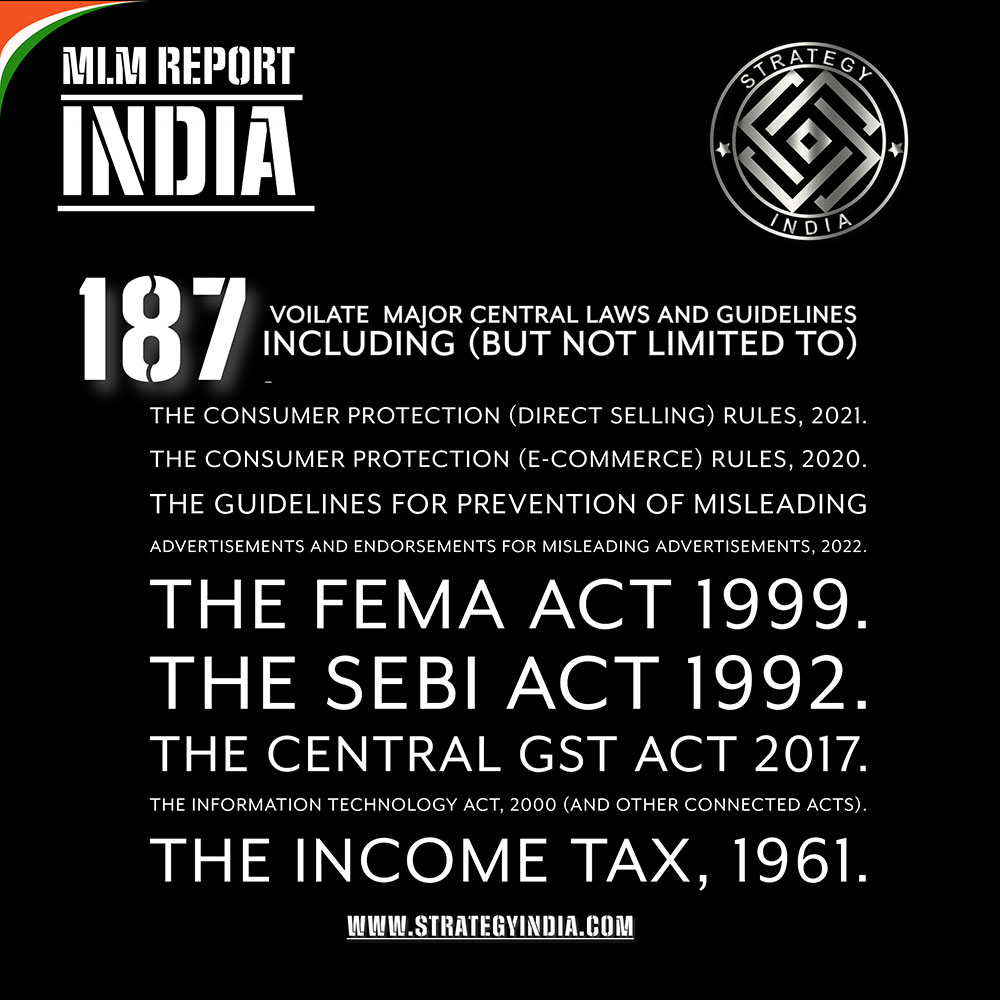
The Consumer Protection (Direct Selling) Rules, 2021 impose explicit obligations on direct selling entities and direct sellers.
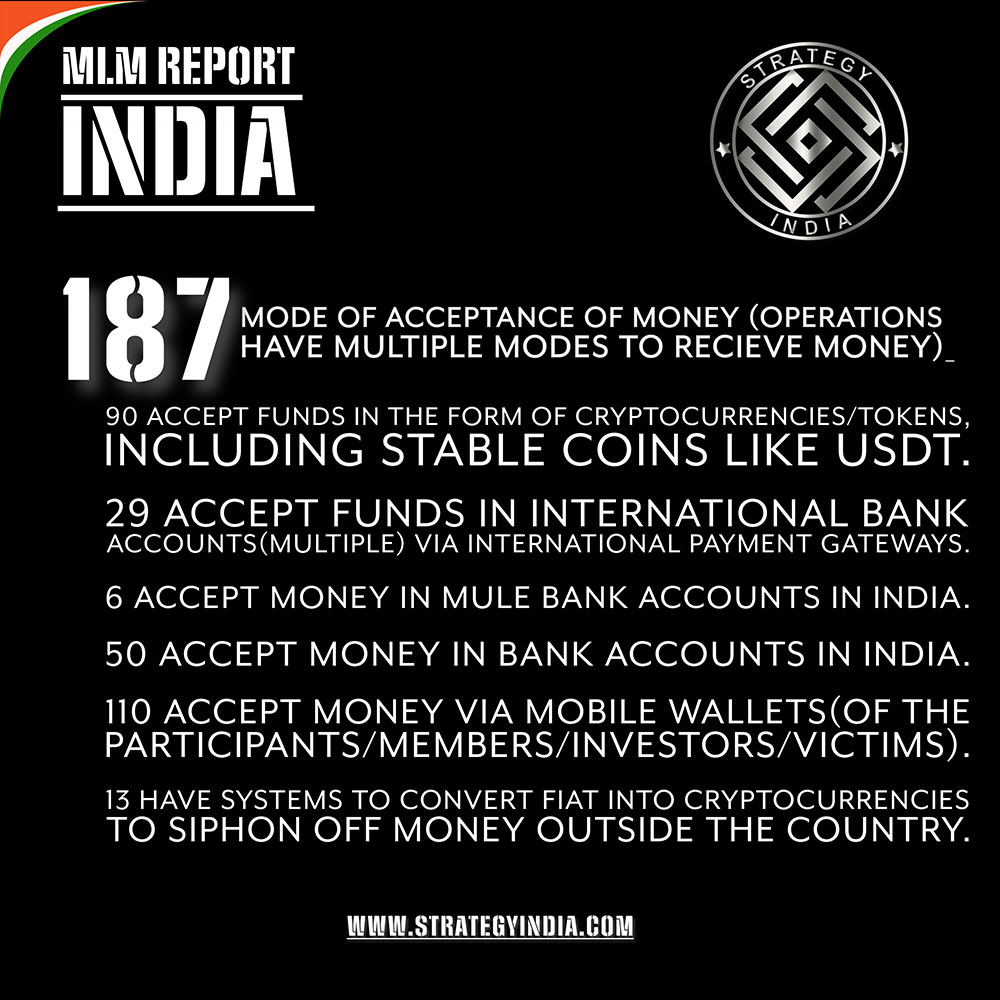
The Enforcement Directorate (ED) has acted in several major cases involving Direct Selling MLM‑type operations alleged to be in violation of the PCMC Act and PMLA 2002 (for example, Vihaan/QNET, HighRich Online, KBC Multitrade), attaching and freezing assets worth hundreds of crores.
Globally, regulators and bodies such as the ILO and regional blocs are re‑examining independent‑contractor status, influencer and social‑commerce marketing, youth targeting, and digital selling and payment practices.
In this context, a direct selling consultant / MLM consultant with deep regulatory and industry expertise is no longer a “nice to have”. It is a risk‑management and licence‑to‑operate imperative. This article sets out:
What the 2021 Rules actually require in practice
How India’s WFDSA profile (growth, penetration, product mix, sales‑force demographics) should inform compliance design ?
A practical compliance architecture that a serious direct selling company should implement with specialised direct selling consultancy support.
India in the global WFDSA landscape: why compliance cannot be an afterthought
WFDSA’s 2024–25 global statistics provide essential context for Indian boards and promoters.
Global stabilisation, local acceleration
Worldwide retail sales: US$163.9 billion in 2024, a negligible ‑0.05% change versus 2023 after declines in 2022 and 2023, suggesting the downturn is bottoming out.
India: US$3.53 billion in 2024, +4.0% year‑on‑year and +7.0% CAGR from 2021 to 2024, materially outpacing the global channel.
Regional position
Asia–Pacific: US$66.06 billion in 2024 (40.3% of global sales), flat versus 2023 with a modest three‑year CAGR of ‑0.3%.
India: 6th‑largest market in Asia–Pacific with 5.3% of regional sales, behind China, Korea, Malaysia, Japan and Taiwan, but ahead of Thailand and Indonesia.
Market penetration and macro‑exposure
WFDSA estimates India’s direct selling retail sales at about 0.089% of GDP, placing it in the “mid‑penetration” tier, neither niche nor saturated.
As penetration rises, regulators inevitably regard the sector as systemically relevant for consumers and small investors.
Sales‑force structure
Global: 104.3 million independent representatives in 2024; 72.1% women; volumes broadly stabilising after two years of decline.
Asia–Pacific: 62.3 million independent representatives (c. 59.8% of the global sales force
India: 8.8 million independent representatives, with women representing 44% of the active sales force, lower than the global female share, but significant in absolute terms
Product mix
Global:
- Wellness: 29.0%
- Cosmetics & Personal Care: 22.8%
- Household Goods & Durables: 15.3%
Together, these three categories account for 67.1% of global retail sales.
Asia–Pacific:
- Wellness: 43.2% of regional sales
- Household Goods & Durables: 22.9%
- Cosmetics & Personal Care: 18.1%.
India (category mix, ex‑VAT):
- Wellness: 64% of retail sales
- Cosmetics & Personal Care: 24%
- Household Goods & Durables: 4%
- Clothing & Accessories: 3%
- Foodstuffs & Beverages: 2%
- Other products/services: 2%.
India is therefore one of the most wellness‑concentrated direct selling markets in Asia–Pacific.
Entrepreneurial base
WFDSA, drawing on GEM and World Bank data, estimates that India has approximately 275 million “latent entrepreneurs”, people aged 15–64 who are not currently business owners but intend to start a business within three years, the highest absolute number in the world
Taken together, these facts explain why compliance risk in India is structurally high:
The absolute scale of India’s direct selling activity (top‑15 globally, top‑10 in Asia–Pacific) makes it attractive both to serious companies and to fraudsters.
The wellness dominance heightens regulatory sensitivity around product claims, health and nutrition benefits and scientific substantiation.
The large, partially inexperienced sales force means mis‑selling, over‑claiming and unapproved representations are constant risks.
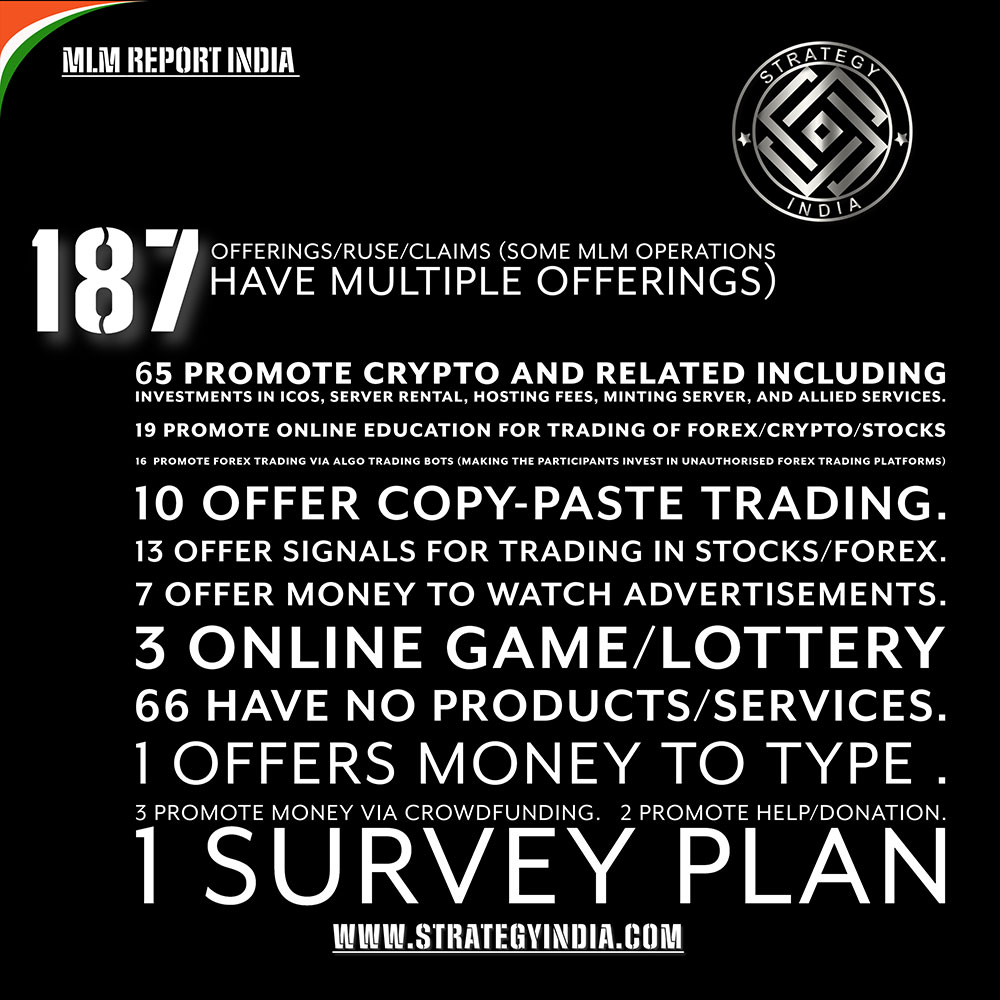
A vast pool of aspiring entrepreneurs creates fertile ground both for legitimate opportunities and for pyramid / money‑circulation schemes masquerading as direct selling.
A credible multilevel marketing consultant must therefore be able to translate this WFDSA and macro context into concrete risk controls aligned with India’s legal framework.
What changed in 2021: the regulatory framework for direct selling
The Consumer Protection (Direct Selling) Rules, 2021 are India’s first comprehensive legal framework specifically targeting direct selling entities and direct sellers. They sit under the Consumer Protection Act, 2019, and interact with the PCMC Act, 1978 and PMLA.
Key obligations for direct selling entities
-
Legal presence in India
- Must be registered or incorporated in India and have a physical registered office within India.
- Foreign entities offering goods or services to Indian consumers, whether online or offline, are explicitly brought into scope.
-
Self‑declaration against pyramid / money‑circulation schemes
- Must self‑declare that they are not involved in any pyramid or money‑circulation scheme as defined under the PCMC Act, 1978.
-
Direct seller onboarding and KYC
- Must verify and maintain records of all direct sellers, including identity and address verification.
- Must issue identity cards to direct sellers and maintain records of these issuances.
-
Grievance redressal mechanism
- Must implement a grievance redressal mechanism that acknowledges complaints within 48 working hours and ordinarily resolves them within one month.
-
Mandatory website disclosures
- Must display on the website: registered name and address; customer care and grievance redressal contacts; complaint tracking system; return / refund / exchange policies; pricing breakdown; and payment method information.
-
Liability and oversight
- Are liable for grievances arising from the sale of goods or services by their direct sellers and must monitor their sales practices and representations.
-
Obligations for direct sellers
- Must not misrepresent products, make false or misleading claims or engage in unfair trade practices.
- Must not participate in, or promote, pyramid or money circulation schemes and are responsible, under the self declaration principle, for their own conduct.
The Pyramid Scheme test
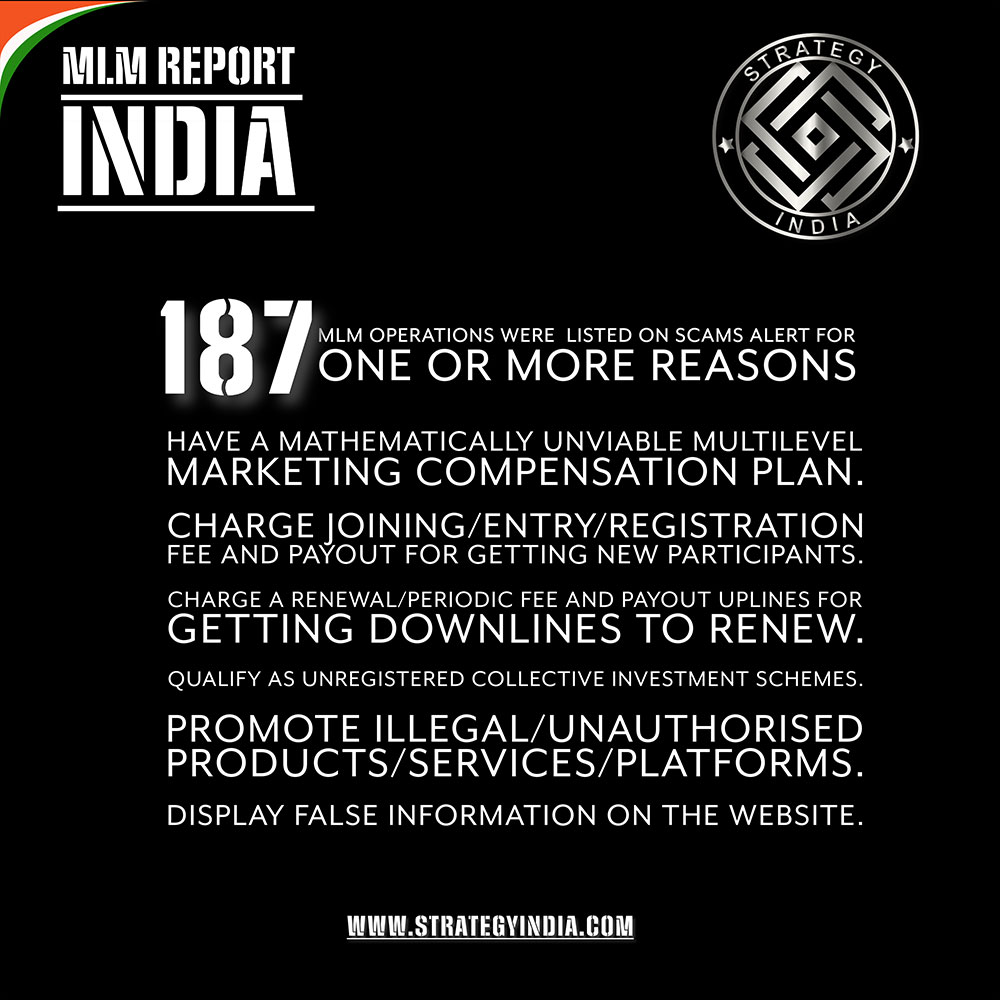
The Rules do not provide a formulaic numerical definition (for example, “x% of income must come from product sales to the consumers who are not a part of the opportunity”). Instead, they incorporate the PCMC(B) Act 1978 by reference. Indian courts have generally treated schemes as illegal where participants primarily earn from recruitment and associated entry or subscription fees, rather than from bona fide product or service sales.
The absence of formal “safe‑harbour” ratios means that compensation‑plan design and evidence‑keeping are central compliance issues, not peripheral concerns.
The real‑world enforcement landscape
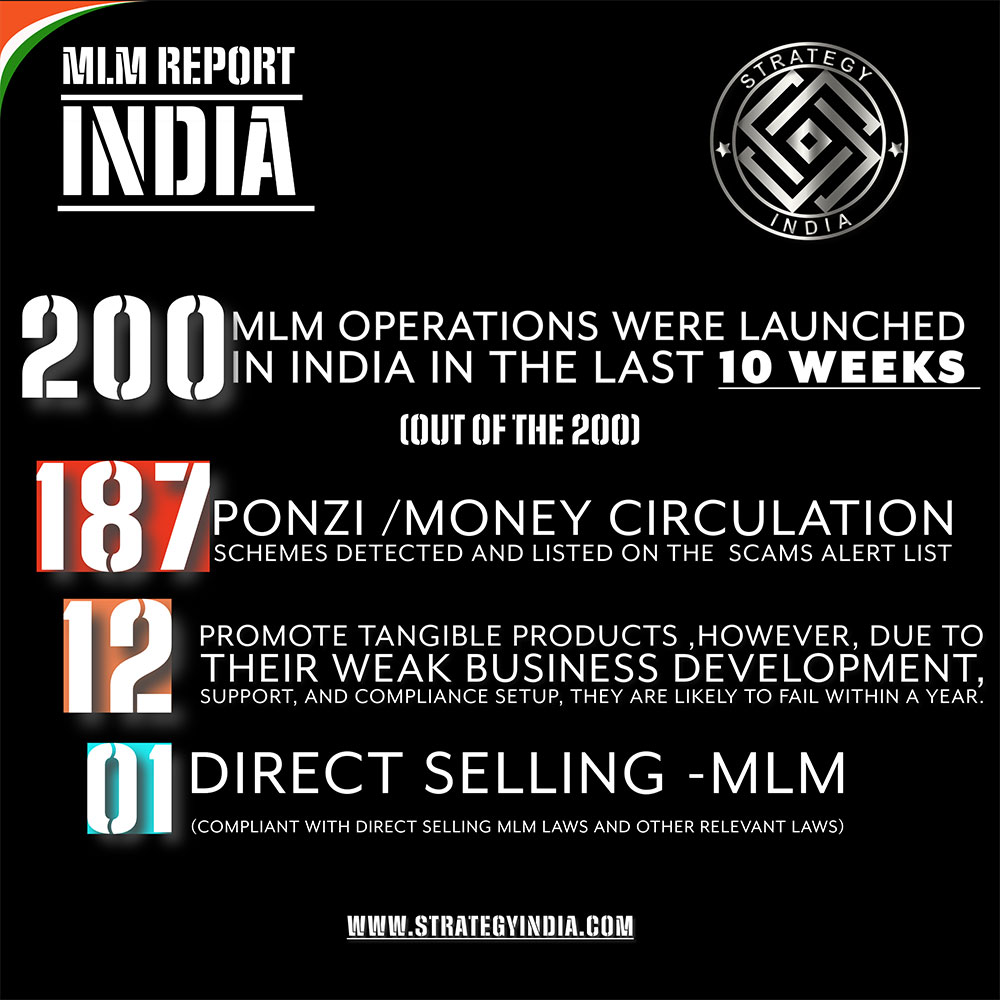
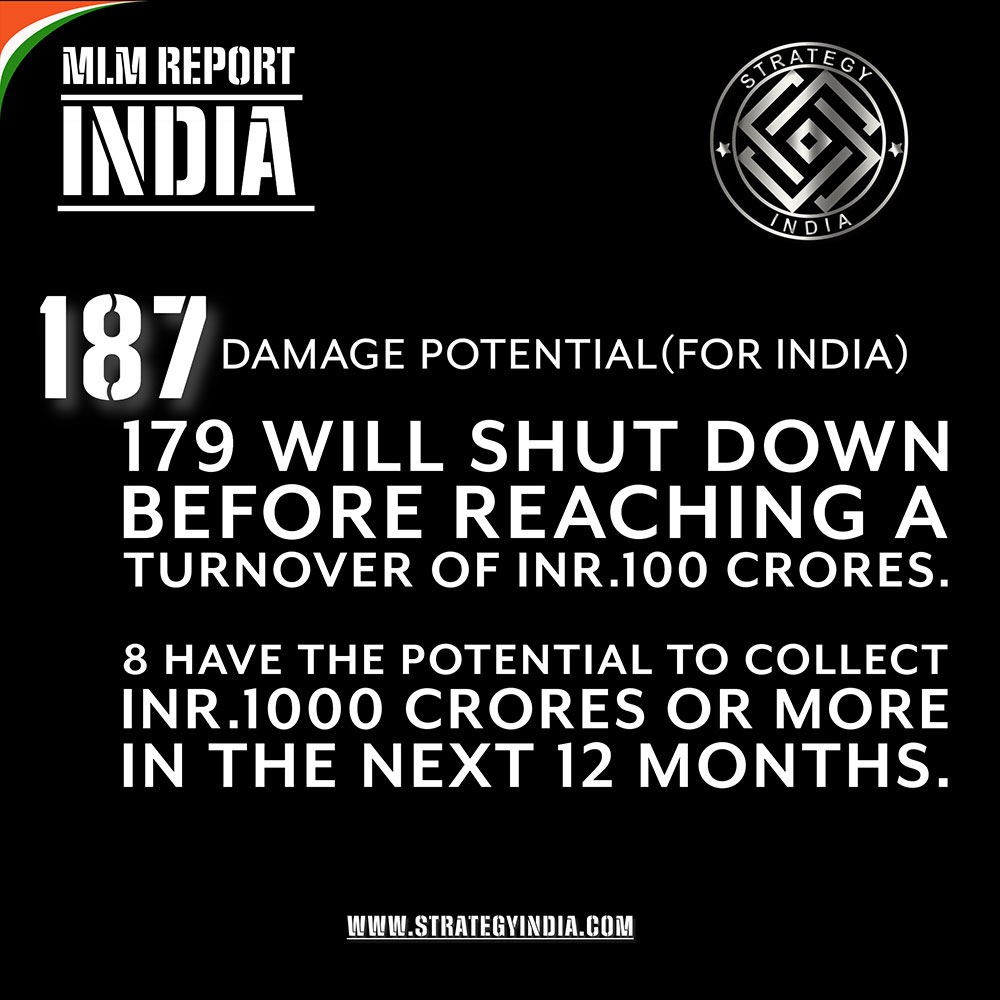
Recent EOW/ED actions demonstrate how quickly an “MLM model” can be re‑characterised as a money‑circulation or Ponzi scheme if these principles are ignored:
Vihaan Direct Selling (QNET India)
ED froze 36 bank accounts, with attached amounts reported between ₹90 crore and ₹137 crore across different official and media reports.
Investigators alleged that more than ₹2,000 crore had been routed through shell entities under the guise of direct selling.
HighRich Online
ED press releases and court‑linked reporting indicate ₹212 crore in proceeds of crime traced and frozen, with total collections from the public estimated at ₹1,157.32 crore.
The scheme promised 15% annual interest plus 30% referral income on “digital ID” purchases—economically indistinguishable from a Ponzi arrangement.
KBC Multitrade
ED press releases and media reports describe a multilevel scheme with binary and matrix commissions and “awards & rewards”, with more than ₹200 crore collected from investors; assets worth ₹84.24 crore were attached under PMLA.
The pattern is consistent: entities whose income and messaging are heavily recruitment‑driven, or whose product economics are opaque, are highly exposed.
Why a generalist consultant cannot navigate this landscape ?
A direct selling consultant differs from standard corporate advisers in three fundamental respects.
-
Regulatory arbitrage expertise
Because the 2021 Rules are principles‑based rather than formula‑based, entities must engineer business models that are defensible under both consumer‑protection law and PCMC/PMLA. This requires:
Understanding how courts have interpreted “money circulation” and “pyramid scheme” language in earlier cases.
Knowing, from experience and dialogue, how DPIIT and state‑level monitoring mechanisms scrutinise direct selling MLM models, even though detailed internal criteria are not public.
Designing compensation structures and volume‑based incentives that keep the entity clearly on the product‑driven side of the line, while remaining commercially competitive.
A generalist consultant typically applies generic governance and incentive templates. A direct selling consultancy specialist starts from the legal boundary conditions and then works backwards into business design.
-
Multi‑jurisdiction complexity
The 2021 Rules are national, but enforcement is fragmented:
Kerala has established a Direct Selling Monitoring Mechanism (DSMM) under the Department of Consumer Affairs. Direct selling entities must enrol with the State Level Monitoring Authority and meet additional oversight requirements, including Legal Metrology compliance for packaged products.
Maharashtra and several other states have seen FIRs and economic‑offence investigations against direct selling entities, often running parallel to ED and police action.
Entities incorporated abroad but “selling to Indian consumers” via digital platforms are expressly covered by the Rules.
A serious network marketing consulting partner must therefore understand central‑level rules and state‑level mechanisms, and have the relationships and credibility to resolve questions before they escalate into criminal process.
-
Evidence documentation under scrutiny
WFDSA emphasises that much of the channel’s global legitimacy now depends on its ability to demonstrate responsible conduct to regulators and policymakers. In practice, when an ED, CBI or state‑level investigation begins, authorities expect to see:
- Bank and ledger reconciliations showing product procurement and genuine consumer sales, clearly distinguished from recruitment fees and bonuses.
- Compensation‑plan documents with worked numerical examples showing that recruitment‑linked income is structurally constrained.
- Grievance logs evidencing timely acknowledgement, investigation and, where necessary, delisting of errant distributors.
- Training materials and marketing content that emphasise product value and consumer outcomes, rather than “get rich quick” narratives.
A direct selling consultant builds these audit trails into operational systems from inception. A generalist adviser typically encounters these evidentiary gaps only after a notice is received.
The 2021 Rules: a practical compliance checklist (basic minimum not comprehensive)
The following operating blueprint aligns with the Rules and with the enforcement and market realities described above.
-
Entity registration and governance
Regulatory requirement: Incorporation / registration in India plus a physical office.
Compliance actions:
Incorporate with the Registrar of Companies and obtain a valid CIN.
Maintain a staffed, functioning office capable of receiving regulatory notices and hosting inspections.
Where applicable, obtain a DPIIT registration or allotment number and display this on the website, invoices and key corporate documents.
-
Self‑declaration of compliance
Regulatory requirement: Self‑declaration of non‑involvement in pyramid / money‑circulation schemes.
Compliance actions:
Pass a board resolution recording that the business model has been evaluated against the PCMC (B) Act 1978 and does not rely primarily on recruitment‑linked inflows.
Publish a concise version of this declaration on the website and retain the full text in compliance records.
Conduct annual internal audits to confirm that compensation payouts and revenue mix remain consistent with this declaration.
-
Direct Seller registration and identity verification
Regulatory requirement: Maintain records of all direct sellers; verify identity and address; issue ID cards.
Compliance actions:
Implement a Direct Seller/Distributor Management System (DMS) with KYC workflows.
Collect and verify Aadhaar / PAN / voter ID and current address proof for every distributor.
Issue physical or secure digital ID cards with unique identifiers; maintain issuance and cancellation logs.
For each onboarding, record who performed verification, when, and using which documents.
-
Product sales documentation
Regulatory requirement: Demonstrate that the entity is “primarily product‑based” and that distributor income is derived from product sales, not recruitment.
Compliance actions:
Use POS or invoicing systems that clearly separate:
- consumer sales,
- stock purchases by distributors, and
- commissions / incentives.
Generate monthly management reports showing the split between product‑driven and recruitment‑linked income and payouts.
Adopt and disclose simple, auditable rules e.g. “Standard retail commission 20% on consumer sales; network bonuses capped at x% of total payout” and monitor adherence.
-
Grievance redressal mechanism
Regulatory requirement: Acknowledge complaints within 48 working hours and resolve them within one month, as far as possible.
Compliance actions:
Appoint a named Grievance Redressal Officer and publish their details on the website.
Provide at least one online form, one dedicated email address and one phone channel for complaints.
Log every complaint with receipt timestamp, acknowledgement timestamp and closure outcome.
Produce quarterly internal reports summarising complaint types, volumes, resolution times and systemic issues.
-
Website disclosures
Regulatory requirement: Publish core information and policies on the website.
Compliance actions:
Create a “Legal & Compliance” section containing
- full legal name and registered address,
- customer care and grievance contacts,
- complaint‑ID tracking facility,
- clear return / refund / exchange policies with timelines,
- transparent pricing structure (including joining or renewal charges, if any), and
- accepted payment methods and any surcharges.
-
Anti‑pyramid safeguards
Regulatory requirement: Compensation structure must not violate PCMC(B) Act 1978 definitions of money‑circulation / pyramid schemes.
Compliance actions:
Run quarterly “pyramid‑risk audits” on a statistically meaningful sample of distributors.
For each, calculate the proportion of income derived from product margins versus recruitment‑linked bonuses; flag and investigate cases where recruitment income dominates.
Train all direct sellers/ distributors on the PCMC prohibition and permitted representations; maintain attendance records.
Establish a documented delisting process (with reasons recorded) for persistent violators, and ensure that delisting’s feed back into risk assessment.
Why this matters commercially: the cost of non‑compliance
The CBI/ED/EOW cases highlighted earlier are not theoretical. They illustrate concrete, recurring consequences:
Frozen and attached assets in the tens or hundreds of crores, often for extended periods.
Business interruption, when bank accounts are frozen, payment gateways disengage and key vendors or logistics partners pull back.
Personal exposure of founders and senior management under PMLA 2002 , MPIDA , OPIDA, BUDSA 2019 and PCMC(B)Act 1978.
Long‑term brand damage, in a market where WFDSA data shows robust consumer demand across wellness, personal care and household categories and multiple legitimate competitors
By contrast, entities that can demonstrate a documented, WFDSA‑aware compliance architecture clearly product‑centric, with robust records are far better placed to persuade regulators and banks that they are legitimate direct selling businesses rather than disguised Ponzi or money‑circulation schemes.
What Strategy India brings to direct selling compliance
Against this global and domestic backdrop, a consulting partner must do far more than provide template policies. A specialised direct selling consultant such as Strategy India can:
-
Align business models with law and WFDSA reality
- Design compensation plans and field policies consistent with the 2021 Rules so as not to violate any acts including, the PCMC Act and PMLA 2002.
- Reflect India’s specific WFDSA profile—high wellness share, strong growth, mid‑level penetration so that product, pricing and volume structures are defensible commercially and regulatorily
-
Build evidence‑rich systems
- Implement KYC, DMS, POS and grievance infrastructures that collectively create the audit trail regulators expect.
- Configure dashboards so management regularly sees the same key indicators a regulator, bank or platform would review (for example, product‑to‑recruitment income ratios, complaint trends, delisting activity).
-
Navigate state‑level mechanisms
- Support enrolment and compliance under Kerala’s DSMM and similar state monitoring or registration frameworks.
- Coordinate responses where state‑level action intersects with ED, police or central‑level consumer protection investigations.
-
Interface with government and ecosystem players
- Guide entities through DPIIT registration and follow‑on interactions.
- Help management prepare for consultations and queries from consumer affairs departments, financial‑sector regulators, payment intermediaries and law‑enforcement agencies.
This is not “tick‑box compliance”. It is operational integration of regulatory requirements and WFDSA‑level expectations into the core business model.
The practical path forward
For any serious direct selling / MLM company in India, a pragmatic roadmap is:
Step 1: Regulatory and WFDSA‑context audit (Weeks 1–2)
Map the current model against the 2021 Rules and other relevant acts/rules in force.
Benchmark product mix, wellness exposure, pricing and sales‑force structure against WFDSA India data (for example, 64% wellness share, c. 8.8 million sellers, mid‑penetration
Review website disclosures and grievance mechanisms.
Audit distributor KYC and ID issuance records.
Analyse financial flows: what percentage of revenue and payouts is demonstrably product‑driven versus recruitment‑linked?
Step 2: Remediation and redesign (Weeks 3–6)
Redesign compensation structures where necessary to reduce pyramid risk while preserving commercial viability.
Upgrade DMS and POS systems to capture the data points regulators and counterparties expect.
Update website and documentation to close all gaps against the 2021 Rules.
Implement or strengthen the grievance redressal mechanism, including internal escalation rules.
Step 3: Institutionalise ongoing compliance (Month 3+)
Conduct quarterly pyramid‑risk audits and grievance reviews.
Maintain organised audit trails for all key functions (onboarding, training, marketing approvals, complaints, delisting’s).
Periodically refresh training for field leaders, incorporating WFDSA trends (for example, shifting age mix, women’s participation, and category expectations).
Disclaimer
All enforcement case details and market statistics referred to in this article are based on publicly available FIR’s, Chargesheets- CBI, ED and EOW & press releases, WFDSA data and reputable media or industry reports. Case outcomes remain subject to judicial process.